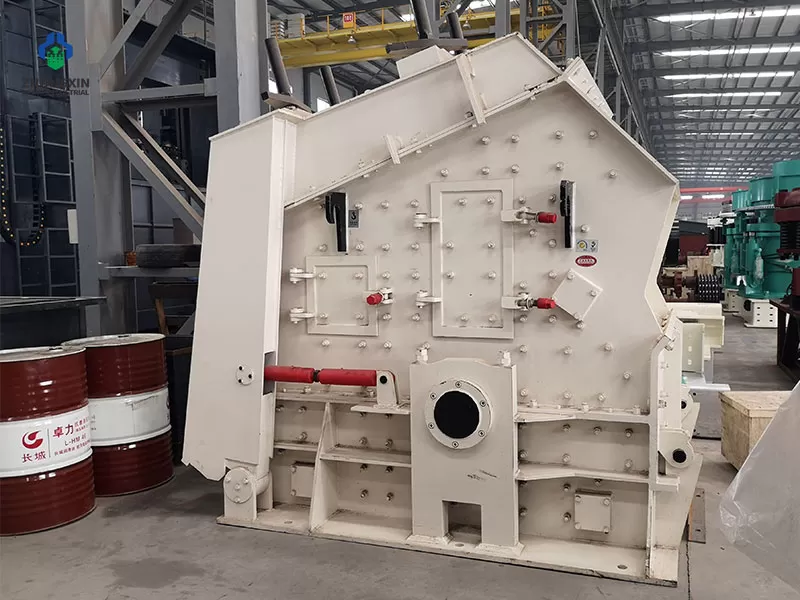
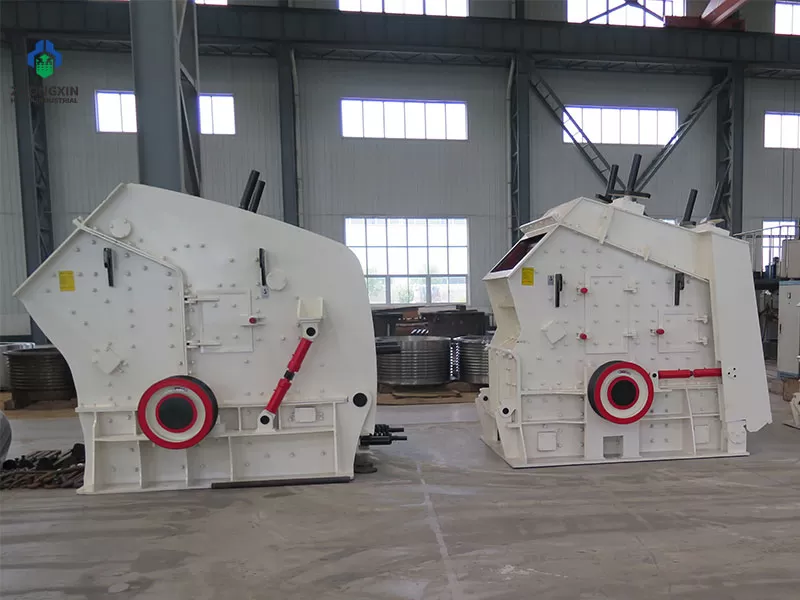
PF Series Impact Crusher

PF Series Impact Crusher – Product Overview
Whatsapp/Wechat:
+86-13676922906
  • WhatsAppWhatsApp
  • WeChatWeChat
15s Quick consultation
1h Technical guidance
32h Quotation + drawing
365d Exclusive customer service

What are the advantages and characteristics of impact crushers?

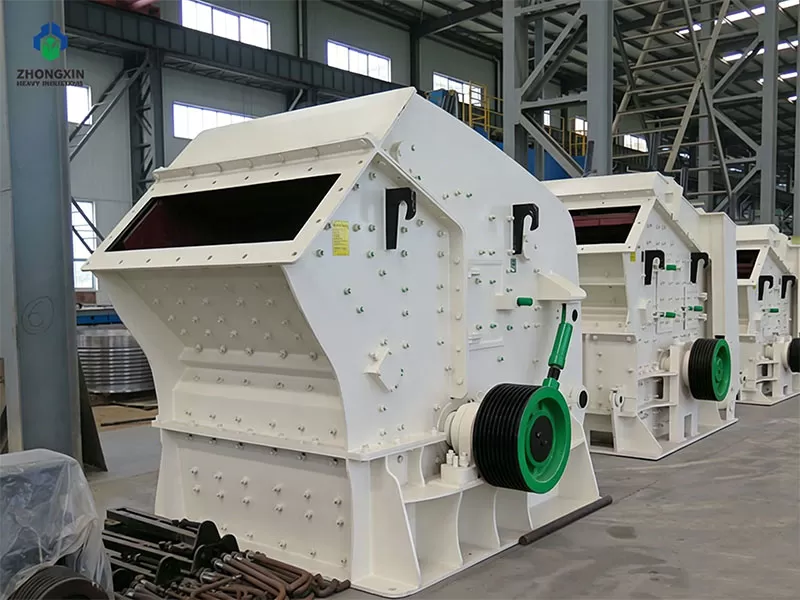
1. Optimized Cavity for Superior Output: The specialized design enhances the impact crushing efficiency, producing final materials with low flaky content.

2. Ideal Impact Crusher for Limestone: It performs exceptionally well when processing non-abrasive and medium-hard materials, making it the most cost-effective impact crusher for limestone, gypsum, and concrete recycling.

3. Heavy-Duty Rotor: Equipped with a robust horizontal impact crusher rotor that provides higher inertia and reliable performance.


Precautions for the installation of the impact crusher:

(1) As the impact crusher is a unit subject to vibration during operation, all fasteners must be securely tightened during installation and before the trial run; regular inspections and re-tightening are also required during actual production.

(2) During installation, pay attention to the machine's direction of rotation (indicated by an arrow on the pulley); reverse rotation is not permitted.

(3) After installing the motor, a protective guard for the drive belt should be fitted according to the specific installation setup.

(4) The clearance between the impact plate and the blow bars should be gradually reduced to meet operational requirements; after adjustment, manually rotate the rotor several times to check for any signs of impact. Once adjusted, the sleeve nuts must be securely locked to prevent them from loosening due to vibration, which could cause the impact plate to drop and collide with the blow bars, leading to an accident.

(5) Since the discharge outlet of the impact crusher is located at the bottom, factors such as installation height and coordination with the feeding and discharge systems must be carefully considered during the system design phase.
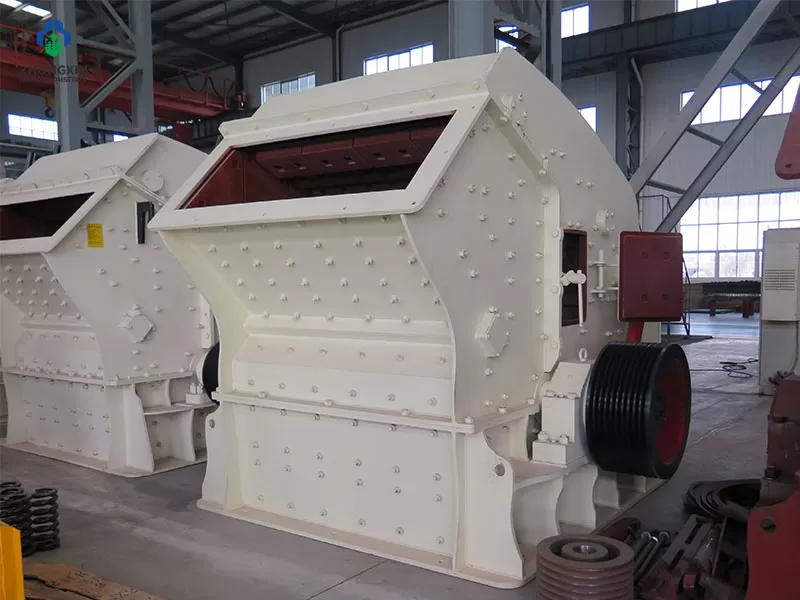
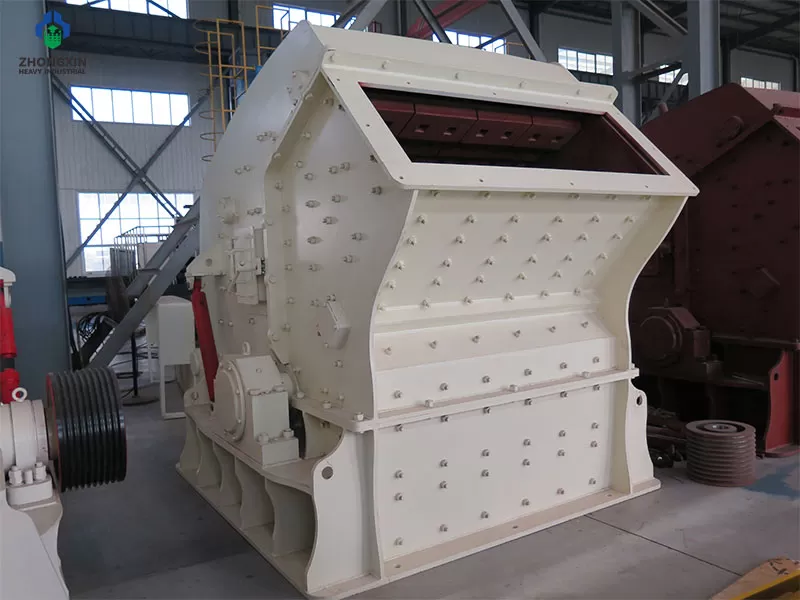
Why choose impact crusher?

What is the working principle of an impact crusher?

Understanding how the PF impact stone crusher achieves its high reduction ratio is key to maximizing your quarry's ROI.

Unlike compression-style crushers, this impact crushing machine utilizes kinetic energy to shatter materials. When the plant is running, the motor drives the heavy-duty rotor at high speeds. As materials enter the impact crushing chamber from the feed inlet, they are struck by the high-inertia blow bars on the rotor.

The rocks are instantly fractured and propelled against the unique impact aprons for a second crushing stage. Finally, the materials bounce back into the blow bar action zone to be crushed again until they reach the required discharge size. This repetitive action ensures a highly efficient reduction ratio and reduces internal stress in the aggregates.

Impact crusher crushes material by striking it with energy. When it works, the motor drives the rotor to rotate at a high speed, on which the blow bar is installed. As soon as the material gets into the affected area of the blow bar, it will be struck by the blow bar and be thrown to the impact devices around the rotor.

The high speed forces the material to rebound from the impact liner to the area where the blow bar affects it until they have been crushed to the required size. The clearance between the impact racks and the rotor can be adjusted to change the size and shape of the end products.
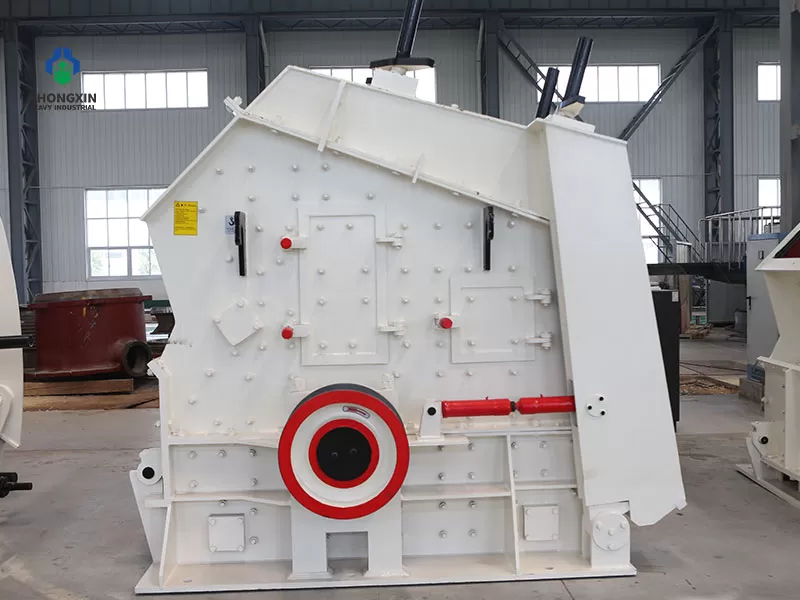
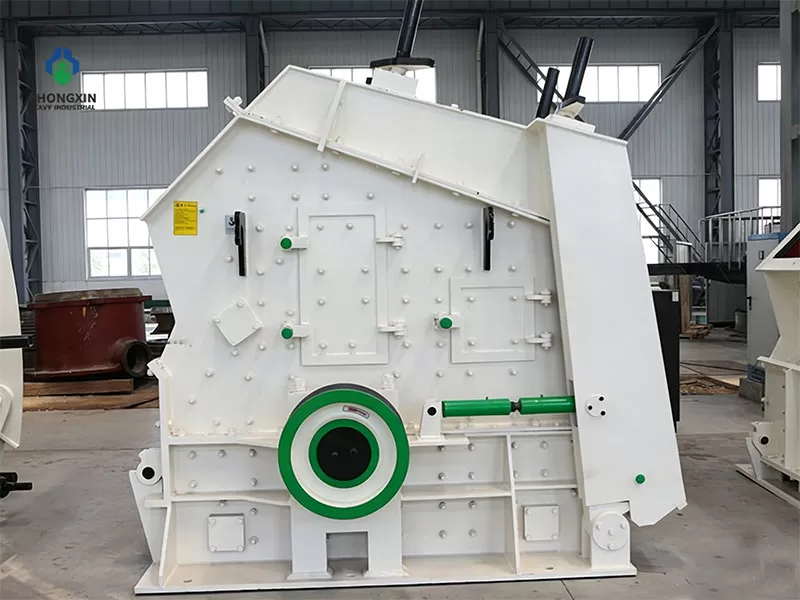
PF impact crusher bearing housing and drive motor assembly at workshop

*La capacidad de producción variará en función de los distintos materiales, tamaño de alimentación y otros factores.

ModelRotor Spec (mm)Feed opening size (mm)Max Feed edge(mm)Capacity (t/h)Motor Power(kw)Weight(t)Overall Dimension(L*W*H)mm
PF-10071000*700400*73030030-5037-559.52400×1558×2660
PF-10101000*1050400*108035050-8055-7512.22400×2250×2620
PF-12101250*1050400*108035070-120110-13214.92690×2338×2890
PF-12141250*1400400*1430350110-180132-16018.62690×2688×2890
PF-13151320*1500550*1530500160-250180-26021.33096×3273×2667
PF-13201320*2000860*2030500160-350300-375283096×3560×3185
PF-15201500*2000830*2050700300-500400-45038.63890×3560×3220
PF-20222000*22002360*1350450800-1000710-900834712×3270×4058

Caso Relacionado

Más >

FAQS

The lifespan of the hammer impact plate is directly related to the hardness and abrasiveness of the material being crushed, as well as the equipment's rotational speed. When processing ordinary limestone, a single set of hammer impact plates can last from several thousand to tens of thousands of tons.

A jaw crusher uses compression force to squeeze materials and is typically used for primary crushing of very hard rocks. In contrast, an impact crushing machine uses high-speed impact force from blow bars to shatter materials. The PF series impactor is preferred when you need a higher reduction ratio and a more cubic, non-flaky end-product particle shape.

In an impact crusher, the blow bars are rigidly connected to the rotor; the inertia of the entire rotor is utilized to impact the material, causing it to shatter while also imparting significant velocity and kinetic energy. In contrast, the hammer heads of a hammer crusher are hinged to the rotor, meaning the material is crushed primarily through strikes by individual hammers, resulting in lower velocity and kinetic energy imparted to the material. Impact crushers feature a large crushing chamber that allows the material room to move, enabling full utilization of the impact effect as the blow bars propel the material against the impact plates. Hammer crushers have a smaller crushing chamber, where material is broken primarily by the direct impact of the hammers. The blow bars of an impact crusher strike the incoming material from below and throw it against the impact plates, whereas the hammer heads of a hammer crusher strike the material in the direction of its movement. Impact crushers generally do not utilize grate bars; the product particle size is controlled by the speed of the blow bars and the gap between the blow bars and the impact plates (or apron plates). Hammer crushers typically feature grate bars at the bottom (though reversible hammer crushers without grate bars also exist), and the crushed product is discharged through the screen openings. The crushing chamber of an impact crusher significantly influences productivity, energy consumption, product particle size and shape, and liner wear. Therefore, designing an optimal crushing chamber is crucial for ensuring superior crusher performance. The crushing chamber of an impact crusher is defined by the space enclosed by the feed guide plate, two stages of impact plates, and an arc-shaped path extending from the guide plate's discharge point to the discharge opening of the second-stage impact plate. The function of the impact plates is to withstand the impact of material thrown by the blow bars—causing the material to shatter—and to rebound the crushed material back into the crushing zone for further impact breakage. The shape and structure of the impact plates have a significant effect on crushing efficiency. The suspension mechanism for the impact plates also serves as the discharge opening adjustment device and provides a safety function. During operation, the impact assembly is maintained in its proper working position by gravity, spring preload, or hydraulic pressure. The magnitude of these forces can be determined through equilibrium calculations based on the assembly's operating conditions. In an impact crusher, the blow bars are rigidly connected to the rotor, and the spacious crushing chamber allows the material sufficient room for movement. The machine utilizes a high-speed rotating rotor to strike the material; under the action of the blow bars, the material is not only crushed but also gains significant velocity and kinetic energy. It then impacts against the impact plates mounted on the frame or collides with other material fragments, resulting in further size reduction.

(1) Routine inspections should be conducted frequently during the operation of the impact crusher. If abnormal noise is detected or the bearing temperature exceeds 70°C, the machine must be stopped immediately for inspection; operation may only resume after the fault has been rectified. (2) Feeding should only commence after the machine is running normally. Material feed must be uniform, and care should be taken to prevent the inclusion of iron pieces or other hard objects. Feeding must be stopped before shutting down the machine; the motor should only be turned off after all material inside the crusher has been processed. (3) After maintenance or adjustment of the discharge opening, the rotor should be rotated manually to ensure it turns freely without friction or jamming against other parts before the motor is started. (4) The integrity of the bearing housing seals should be checked regularly. Grease should be replenished monthly, and the bearing housing should be thoroughly cleaned, the lubricant replaced, and the felt seals renewed every three months. (5) When checking for loose fasteners, special attention should be paid to the clamping plate screws that secure the blow bars on both sides of the rotor. This prevents the clamping plates from loosening, which could cause the ends of the blow bars to protrude from the rotor body and strike the machine casing, resulting in equipment damage. (6) To ensure the safety of personnel and equipment, repairs, adjustments, and cleaning operations—as well as the opening of access doors—are strictly prohibited while the machine is running. (7) If the particle size of the crushed product becomes excessive, the machine should be stopped to inspect the wear on the blow bars and prevent damage to the rotor. When blow bars are rotated 180° for reuse due to wear, the weight of each blow bar must be equalized to maintain balance and prevent vibration upon startup.

(1) Free impact crushing. Upon entering the crushing chamber, material is subjected to impacts from high-speed blow bars and collisions between material particles, as well as friction between the blow bars and the material. These forces cause the material to fracture along its natural planes of weakness while in a state of free movement within the chamber. The dust generated by the impact crusher is primarily produced by the collision of material masses in mid-air. (2) Impact crushing (rebound). Material is struck by the blow bars mounted on the high-speed rotating rotor, acquiring high kinetic energy; it is then hurled against the impact plate, resulting in further breakage. The trajectory of the material rebounding from the impact plate is determined by the curvature of the plate itself. (3) Milling/chipping action. As material enters the zone where the blow bars operate, large chunks are milled or chipped away piece by piece by the high-speed rotating blow bars and then thrown outward. Additionally, any material exceeding the discharge opening size—having survived the previous two crushing stages—undergoes further milling and breakage by the high-speed rotating blow bars at the discharge opening.

There are three core differences: ① Connection method: Impact crushers have a rigid connection between the hammer plates and the rotor, utilizing the inertia of the entire rotor for impact; hammer crushers have hinged hammers. ② Impact direction: Impact crushers strike the material from bottom to top; hammer crushers strike the material along its direction. ③ Discharge control: Impact crushers typically have no screen bars, relying on gaps to control particle size; hammer crushers discharge material through bottom screen openings.

The machine must be stopped immediately for inspection. Focus on checking if the bearing housing seal has failed (allowing dust to enter) and if the grease is dried out or contaminated. The solution is to add grease monthly, thoroughly clean and change the oil every three months, and replace the oil felt seals.

Shutdown must follow the principle of "stop feeding first, then stop the machine." First, stop feeding and wait until all material in the crushing chamber has been crushed and discharged before turning off the motor power. This prevents residual material from accumulating in the crushing chamber, avoiding motor burnout or equipment jamming during the next load start-up.

Personaliza Su Solución de Trituración

Contáctenos rellenando el formulario o por Email: sales@zxcrusher.com

Genuine Impact Crusher Wear Parts

Original blow bars, impact plates, and liners ensure perfect fit and maximum wear life for your horizontal impact crusher. Genuine parts maintain crushing efficiency and reduce downtime.

Professional Technical Support

Our team provides installation guidance, operation training, and troubleshooting for your impact rock crusher. We help optimize settings for limestone, aggregate, and mining applications with responsive after-sales service.

Commercial Sourcing & Global Supply

Finding a top-tier impact crusher factory that understands global project standards is crucial. We offer customizable impact crushers for sale that can be tailored into stationary units or integrated into a portable/mobile impact crushing plant chassis. As a verified impact crusher china manufacturer, we ensure all components meet strict international quality certifications. Whether you need a single impact crusher machine or a turnkey impact crushing plant layout, we offer factory-direct wholesale pricing to maximize your project budget. Contact us today to receive an instant, accurate impact crusher price and engineering consultation!

Industrial manufacturing

Lifecycle Services

We provide comprehensive support throughout the entire lifecycle of your equipment. Our service approach ensures long-term reliability and optimized performance for every project.