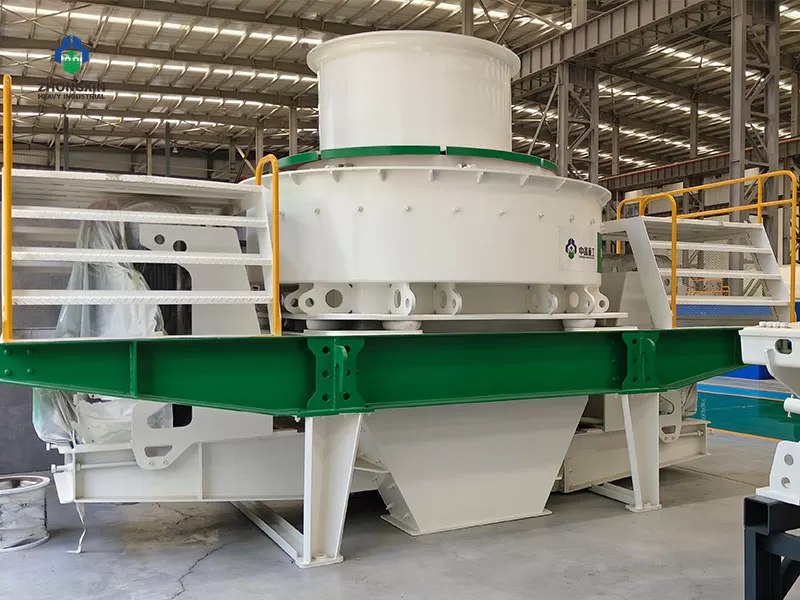
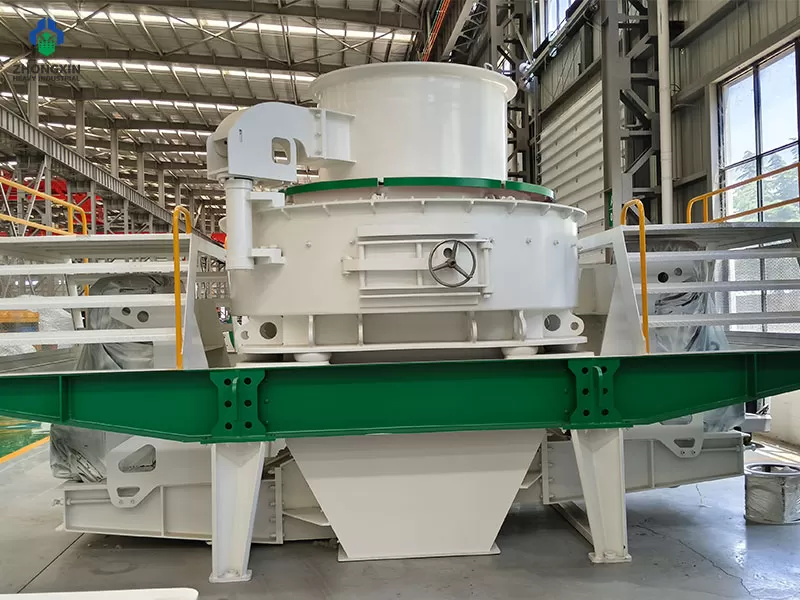
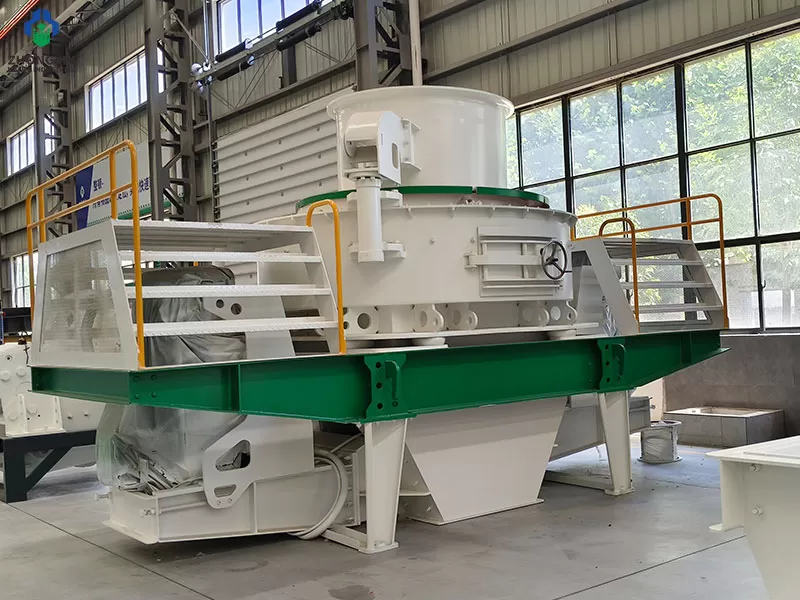
Sand Making Machine

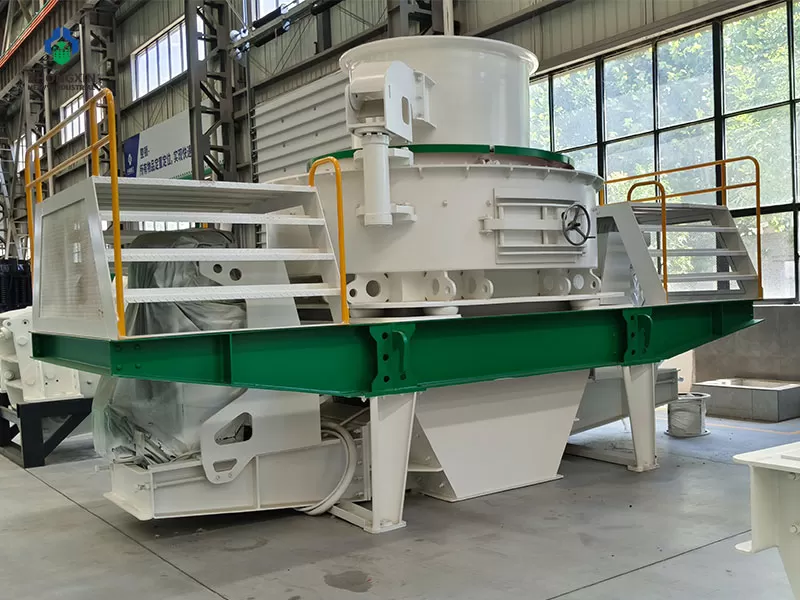
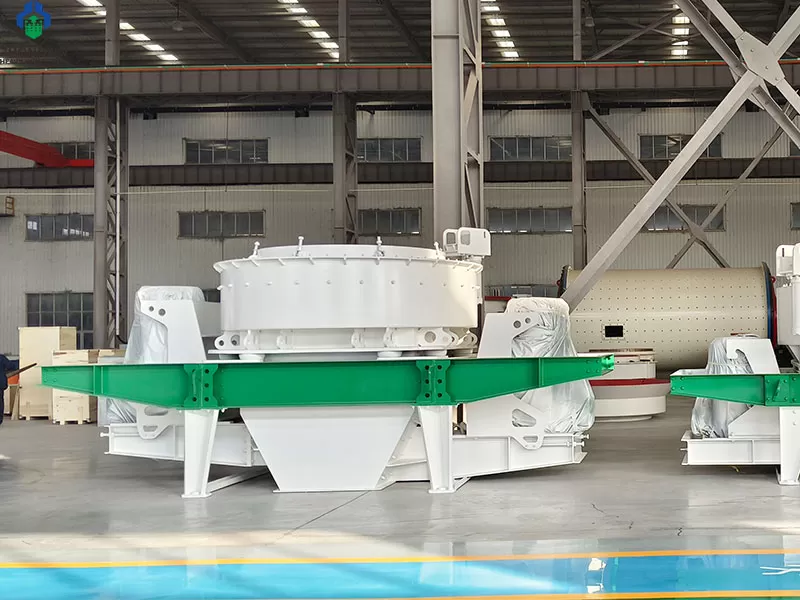
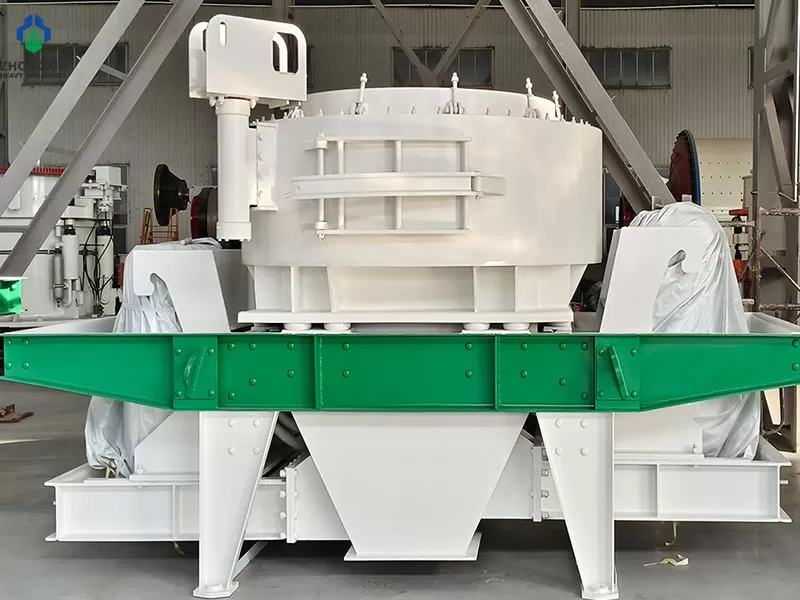
What is Sand Making Machine?
Whatsapp/Wechat:
+86-13676922906
  • WhatsAppWhatsApp
  • WeChatWeChat
15s Quick consultation
1h Technical guidance
32h Quotation + drawing
365d Exclusive customer service

What are the features of the Sand Making Machine?

◎The bearing housing is machined using specialized processes to ensure an inner bore roughness below 0.4 mm and coaxiality between the upper and lower bearing inner bores within 0.01 mm, preventing bearing damage due to misalignment.

◎ The main shaft blank is made of forged alloy structural steel, undergoes two flaw detection processes, and is finally machined on a grinding machine to ensure the main shaft's form and position tolerances, surface roughness, and dimensions.

◎ The sealing sleeve that mates with the main shaft oil seal undergoes a special heat treatment process, achieving a surface hardness of 50 HRC, a level not yet achieved by domestic competitors. This significantly reduces main shaft wear and extends the service life of the main shaft.

◎The frame is connected using high-strength torsion-shear bolts, which offer better strength than traditional rivet connections, ensuring frame stability.

◎ The upper and lower workpieces fixing the spindle are manufactured using specific processes to ensure coaxiality within the machine. This guarantees the spindle is installed vertically, improving overall machine stability during operation.

◎Each component undergoes special manufacturing processes to meet specific requirements, and each process is strictly controlled by quality inspectors.

◎The company has an experienced after-sales team capable of promptly and professionally resolving problems that arise during production.


Manufacturing Power & Supply Logistics

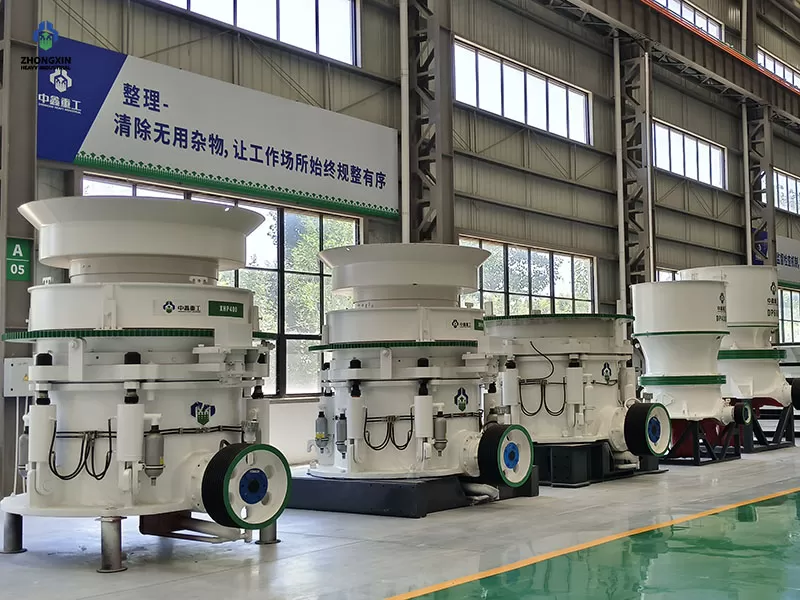
As a globally recognized china sand making machine manufactur and direct china sand making machine factory, we combine world-class engineering with highly competitive pricing structures. Unlike intermediate trading companies, we are direct sand making machine suppliers with full quality control over every casting, rotor, and motor.

Whether you are configuring a greenfield aggregate plant or looking to replace an inefficient unit, we offer custom modular solutions to fit your footprint. Contact our service desk today to request a comprehensive catalog and get an instant, transparent sand making machine price quote.
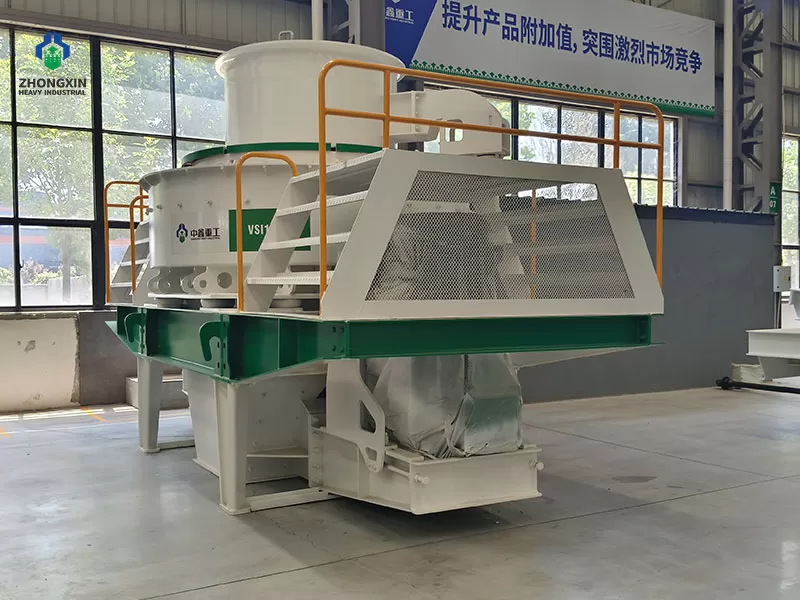
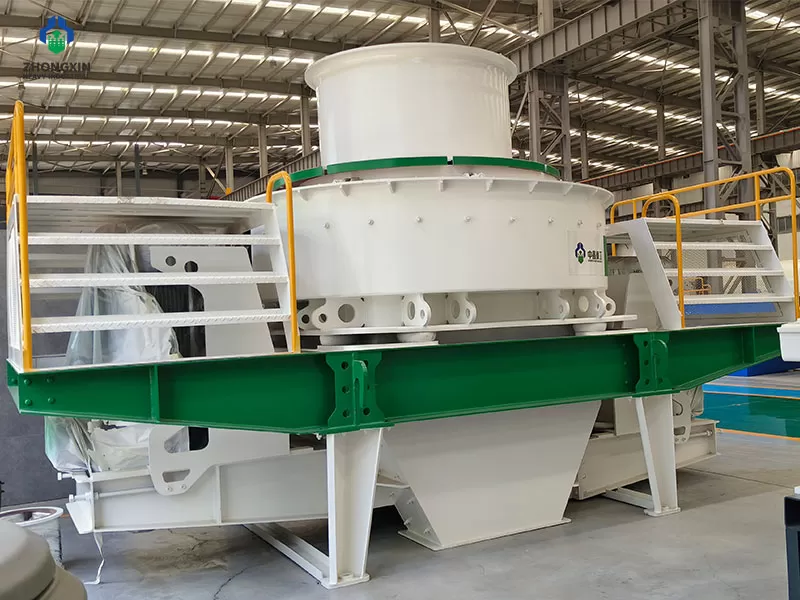
Advantages of Sand Making Machine and Reasons to Choose Us

What is the working principle of the Sand Making Machine?

Materials fall vertically into the high-speed rotating impeller of the sand making crusher machine, where they are accelerated to extreme speeds before being discharged against the surrounding crushing chamber. This intense self-impact action acts as a premium sand crusher, naturally breaking down weak mineral veins and forcing the rocks to fracture along natural cleavage planes. The result is an incredibly consistent particle size distribution optimized for high-strength concrete.

◎ Center Feeding (Stone-on-Iron)
Material enters the center feed hole, enters a high-speed rotating impeller, and is accelerated (tens of times gravity). It is then ejected, colliding first with freely falling material, then with the impact block. The material rebounds upward, changes direction, and collides again with ejected material, forming a continuous curtain. Crushed material discharges from the bottom.

Waterfall-style with Center Feed (Stone-on-Stone)

Material is divided by a distributor: one part goes into the impeller, is accelerated (hundreds of times gravity), and ejected at 60–70 m/s from three channels. It first collides with material falling around the distributor, then impacts the material lining in the vortex chamber, rebounds, and strikes the top, changing direction. Multiple impacts, friction, and grinding occur in a closed-loop cycle. Finished size controlled by screening (e.g., below 20 mesh after three cycles). No metal contact—material self-crushing reduces angular contamination and extends wear life. Airflow self-circulation eliminates dust.
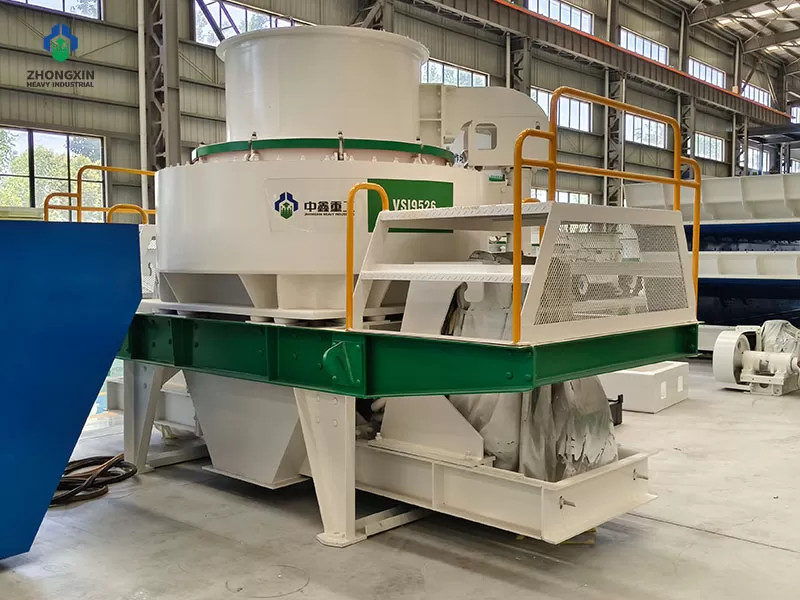
Professional VSI crusher supplier manufacturing sand making machine for sale

*La capacidad de producción variará en función de los distintos materiales, tamaño de alimentación y otros factores.

ModelVSI7611VSI8518VSI9526VSI1140VSI1145VSI1150VSI1263
Capacity (T/H)Surrounding feed and center feed120-180200-260300-380450-520500-640413-683545-583
Full center feed60-90100-130150-190225-260250-360344-368454-486
The max feeding size(mm)Soft stone≤35≤40≤45≤50≤50≤50≤60
Hard Material≤30≤35≤40≤45≤45≤45≤50
Speed(r/min)1700-19301520-16901360-15101180-13001200-13901200-1390900-1150
Double motor power(kW)2×552×902×1322×2002×2202×2502×315
Dimension L×W×H (MM)4100×2250 ×23154160×2300 ×24764540×2500 ×29115000×2716 ×31175450×2900 ×33305450×2900 ×33655700×2980
×3530
Weight (t)8121318.519.519.819
Lubrication stationDouble oil pump motor power(kW)2×0.55kW
SecurityOne dual oil pump works one by one, and the standby oil pump is automatically turned on when the flow is low. High oil temperature, automatic shutdown without oil return,Air cooler lowers oil temperature, heater warms up oil temperature in winter.
Over Dimension L×W×H(mm)1200Х790Х1120
Tank heater power(kW)2

Caso Relacionado

Más >

FAQS

The process of producing sand making machine from stone involves feeding pre-crushed gravel (typically <50mm) into the VSI rotor. The centrifugal force throws the rocks against a rock lining chamber. This stone-on-stone attrition grinds down the sharp edges, creating manufactured sand (M-Sand) that meets strict international building standards for concrete and asphalt mix.

Absolutely. A complete aggregate plant typically utilizes a Jaw Crusher for primary breaking, an Impact/Cone Crusher for secondary reduction, and our stone crusher sand making machine (VSI) as the final shaping and sand production unit.

Yes! We manufacture track-mounted and wheel-mounted mobile sand making machine units. These mobile platforms integrate the VSI crusher, vibrating screens, and return conveyors on a single chassis for maximum portability.

Coarsening of the particle size is usually due to a decrease in impeller speed or wear of the liner. Solution: First, check the tension of the drive V-belt to ensure there is no slippage; second, measure the actual impeller speed and adjust the motor frequency converter to the rated value (generally 2000–2600 r/min); finally, replace the excessively worn liners and impact blocks to restore the crushing gap.

The product particle size distribution depends on factors such as feed characteristics, impeller rotational speed, material particle density within the vortex crushing chamber, and the ratio of overflow (waterfall) feed to rotor feed. The more brittle the material and the higher the impeller speed, the greater the proportion of fine-grained product. Within certain limits, increasing the overflow feed rate reduces the percentage of fines in the product, although the absolute quantity of fines increases. Impeller diameter is related to the crusher's processing capacity and the maximum feed particle size. Since the factors affecting processing capacity are numerous and complex, the impeller diameter is determined based on the maximum feed particle size; generally, a larger feed size requires a larger impeller diameter, and vice versa.

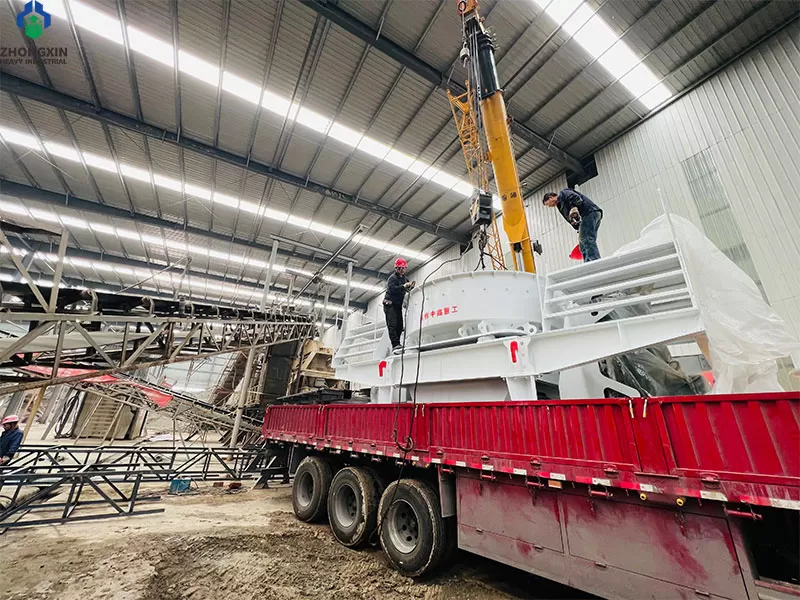
The impact-type sand-making machine should be installed on a concrete or steel structure foundation capable of supporting four times the total weight of the machine. When installed indoors, a concrete foundation is preferred over a support frame to minimize the machine's overall height and save installation space; for outdoor installations, a taller steel support frame may be used to elevate the machine, facilitating the layout of the discharge system. During installation, the machine must be leveled so that the main shaft stands perpendicular to the horizontal plane. Lifting equipment should be installed above the crusher, with a lifting capacity rated for the weight of the heaviest component; adequate clearance for lifting operations and sufficient space on one side of the machine for maintenance access must be provided. Before installation, verify all items against the packing list, checking for any transit damage and ensuring the completeness of all parts and spares. Machine Adjustment Before leaving the factory, the crusher undergoes an 8-hour test run to ensure all components function correctly. Nevertheless, after on-site installation and positioning, a comprehensive inspection and test run must still be performed according to requirements, covering the following items: 1) Check the reliability of lubrication line connections; replenish lubricant before the test run using No. 3 lithium-based grease or molybdenum disulfide (MoS₂) grease. 2) Inspect all fasteners to ensure they are secure and reliable; carefully check the impeller for foreign objects and remove any found immediately. 3) Verify correct motor wiring and normal voltage levels (standard voltage is 380V). 4) Before installing the drive belts, "jog" the motor to check the rotation direction; it must match the direction indicated on the crusher's nameplate (i.e., the impeller rotates counter-clockwise when viewed from the feed inlet). If the direction is reversed, adjust the motor wiring to align with the nameplate indication. 5) For dual-motor drive systems, the main shaft assembly is connected to motors on both sides using an equal number of V-belts; the tension of the V-belts on both sides must be adjusted to be equal and properly aligned. Following a satisfactory inspection, and prior to handover for production, no-load and load test runs must be conducted; the equipment may only be handed over to the production department after successfully passing these tests.

Requirements for the no-load trial run are as follows: (1) The duration of the no-load trial run shall be 4 hours; (2) Before the trial run, rotate the pulley by hand; it should turn smoothly and flexibly; (3) After startup, the crusher should operate steadily without violent vibration or abnormal noise; otherwise, stop the machine for inspection and rectification before attempting the trial run again until normal operation is achieved; (4) During the trial run, the temperature rise of the bearings must not exceed 45°C, and the maximum temperature must not exceed 75°C; otherwise, stop the machine to clean the bearings and adjust the clearance. Requirements for the load trial run are as follows: (1) The load trial run must be conducted only after the no-load trial run has been successfully completed; (2) The duration of the load trial run shall be 8 to 24 hours; (3) Before startup, material with a particle size of no more than 25mm must be piled up inside the vortex crushing chamber until the material flows naturally to form an ore bed; the piled material should be the same type as the material to be crushed; (4) The feed particle size must strictly comply with the range specified in the crusher's technical parameter table; feeding material larger than the specified size is strictly prohibited; (5) Feeding must be uniform and continuous, increasing the feed rate until the impact sand-making machine reaches full load; (6) The temperature rise of the bearings must not exceed 45°C, and the maximum temperature must not exceed 75°C; if these limits are exceeded, stop the machine immediately, identify the cause of the issue, rectify it, and then resume the trial run until the requirements are met.

The operating procedures are as follows: (1) Before startup, check the vortex crushing chamber through the inspection port to ensure an ore bed exists. If not, feed material with a particle size of no more than 25mm into the chamber until the material flows naturally, thereby forming an ore bed. (2) Check the impeller's direction of rotation; viewed from the feed inlet, the impeller should rotate counter-clockwise. If it rotates in the opposite direction, adjust the motor wiring. (3) The startup sequence for the crusher and material conveying equipment is as follows: discharge belt conveyor → vertical shaft impact crusher → feed belt conveyor. The crusher must be started under no-load conditions, and material feeding should only begin after the crusher is operating normally. (4) Feed material strictly according to the specified particle size limits for each model. Material exceeding the specified size is strictly prohibited from entering the crusher; doing so can cause impeller imbalance and excessive wear, or even clog the impeller flow channels and central feed pipe, preventing normal operation. Large pieces of material must be removed promptly if discovered. (5) If the discharge belt conveyor stops running, material feeding must cease immediately; therefore, the discharge belt conveyor should be interlocked with the feeding system for startup and shutdown. Failure to do so could jam the impeller and burn out the motor. (6) Material feeding should be uniform and continuous. (7) During operation, the crusher must not exhibit severe vibration or abnormal noise; if these occur, stop the machine immediately for inspection and troubleshoot the issue before restarting in the correct sequence. (8) During operation, all inspection doors must be tightly sealed, and the belt guard must be properly installed. Daily Maintenance and Safety Procedures The details regarding daily maintenance and safety procedures are as follows: (1) Periodically shut down the machine and open the inspection doors to check the wear on internal components—specifically the wear-resistant lining rings, liner plates, impeller flow channel liners, peripheral expansion plates, and wear blocks. Worn parts should be repaired or replaced promptly. Wear blocks must be replaced as a complete set to ensure the impeller remains balanced during operation. If wear on the impeller body is detected, it should be replaced promptly or sent to the manufacturer for repair. (2) Opening the inspection port to observe internal operations while the crusher is running is strictly prohibited to avoid danger. (3) Use No. 3 lithium-based grease or molybdenum disulfide (MoS₂) grease; fill the bearing cavity to one-third to one-half of its capacity. Add an appropriate amount of grease after 400 hours of operation. Dismantle the main shaft assembly to clean the bearings after 2,000 hours of operation, and replace the bearings after 7,200 to 10,000 hours of operation. The upper bearing of the main shaft assembly serves as the floating end, while the lower bearing serves as the fixed end; after assembly, the pulley should rotate freely when turned by hand. (4) Adjust the tension of the V-belts properly to ensure even load distribution. When using a dual-motor drive, match the V-belts into sets so that the lengths within each set are as uniform as possible; adjust the system so that the current difference between the two motors does not exceed 15 A.

Personaliza Su Solución de Trituración

Contáctenos rellenando el formulario o por Email: sales@zxcrusher.com

High-Chrome & Tungsten Wear Parts Supply

As a leading sand making machine factory, we carry a massive inventory of precision-engineered wear parts ready for immediate global dispatch. Our proprietary high-chrome and tungsten alloy components—including tungsten carbide rotor tips, backup tips, impact plates, and tapered top liners—are certified to extend the operational lifespan of your vsi sand making machine by 30%–50%. This factory-direct supply chains drastically lowers your cost-per-ton and eliminates long lead times.

Turnkey Technical Support & Global Services

We don't just sell high-end hardware; we deliver continuous production uptime as one of the world's most trusted sand making machine suppliers. From customizing a comprehensive stone crusher sand making machine production line layout to dispatching senior field engineers for on-site installation and commissioning, we provide full-lifecycle technical support. Our global service team is available 24/7 for remote diagnostics and operator troubleshooting training.

Customized Parts Packages & Factory Pricing

Whether you are operating a stationary small sand making machine or managing a fleet of heavy-duty mobile sand making machine units, we provide tailormade spare parts packages to minimize emergency shutdowns. By bundling your wear parts (such as upper/lower wear plates and main shaft bearings), you can unlock deep wholesale discounts. Contact our team today to get an instant sand making machine price quotation for your backup consumables.
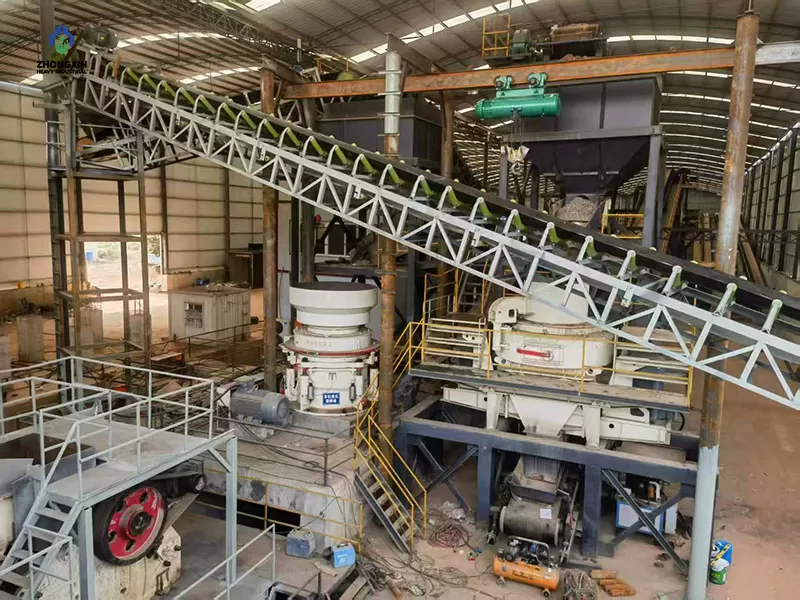
Industrial manufacturing

Lifecycle Services

We provide comprehensive support throughout the entire lifecycle of your equipment. Our service approach ensures long-term reliability and optimized performance for every project.