Jiaozuo Zhongxin Heavy Industrial Machinery Co.,Ltd.
 WhatsApp
 WeChat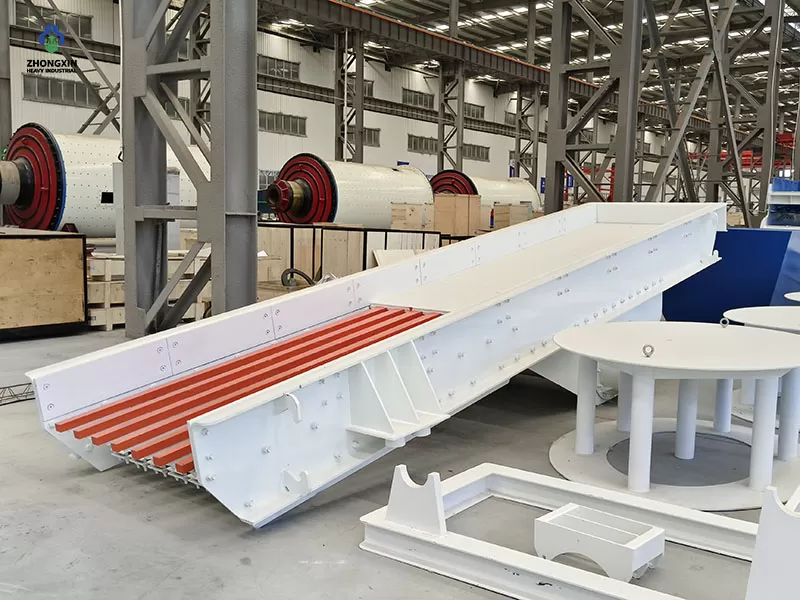
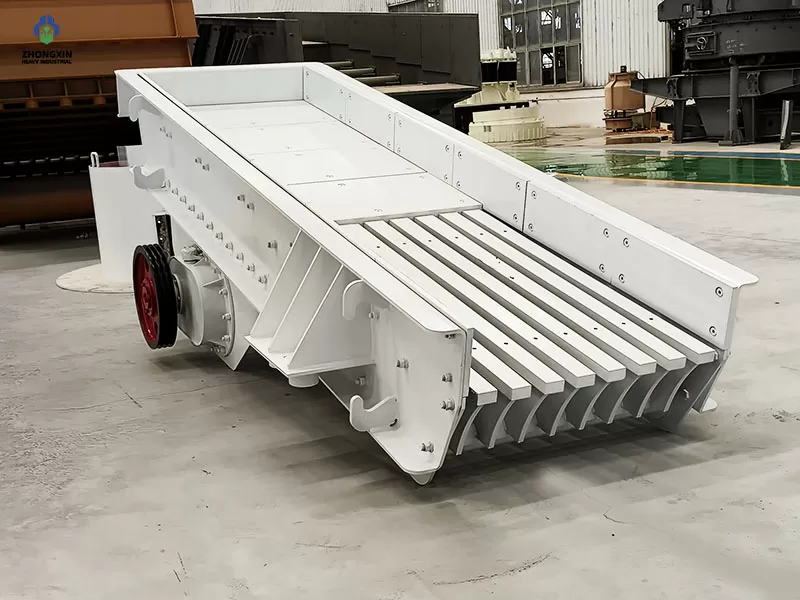
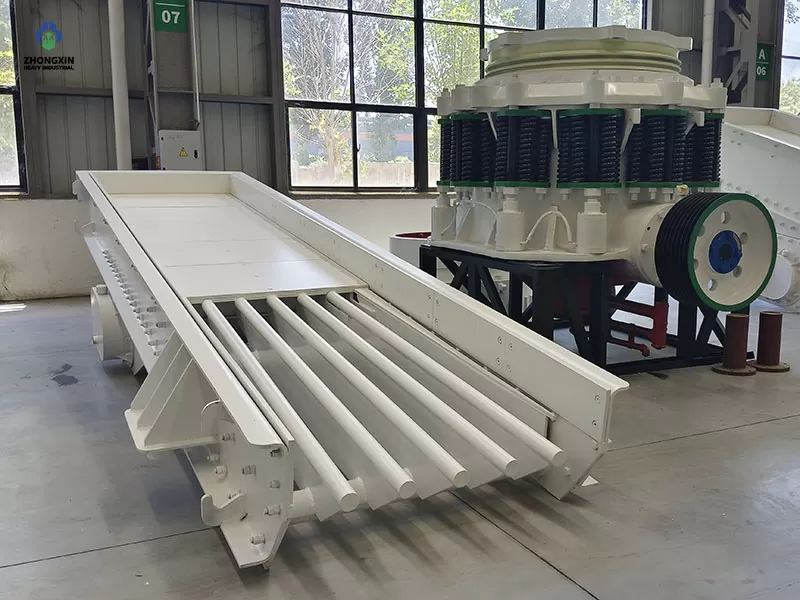
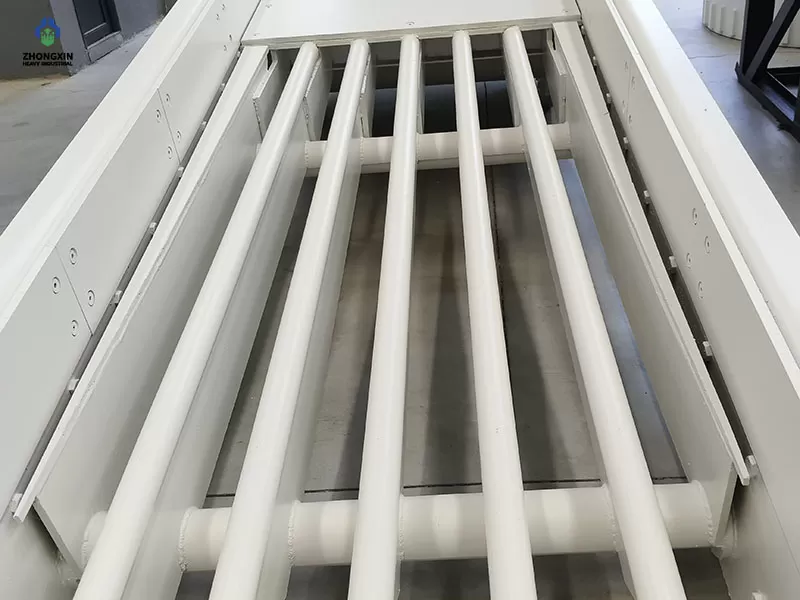
1. Integrated Pre-screening Structure: Simultaneous Feeding and Soil Removal
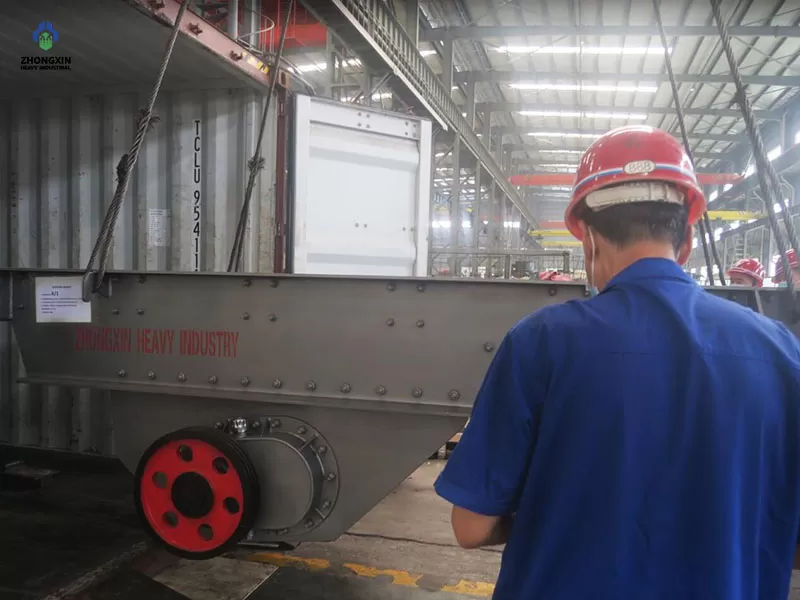
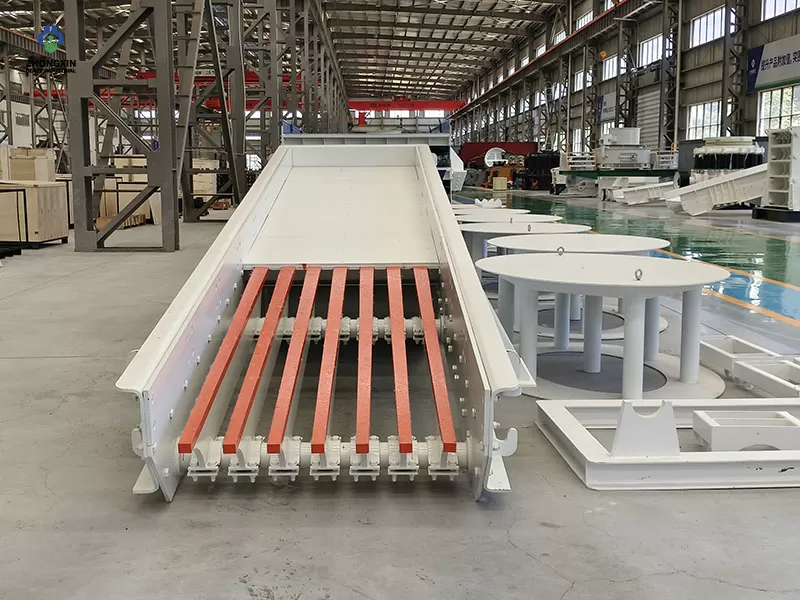
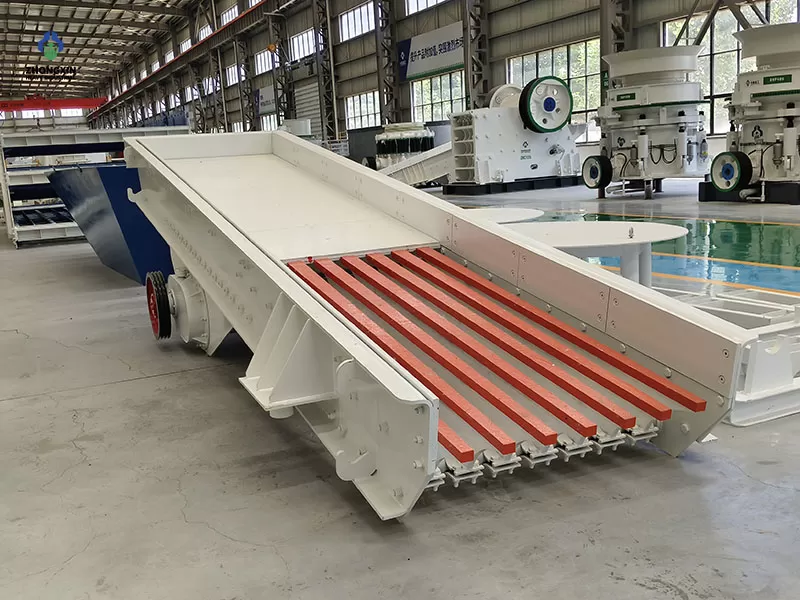
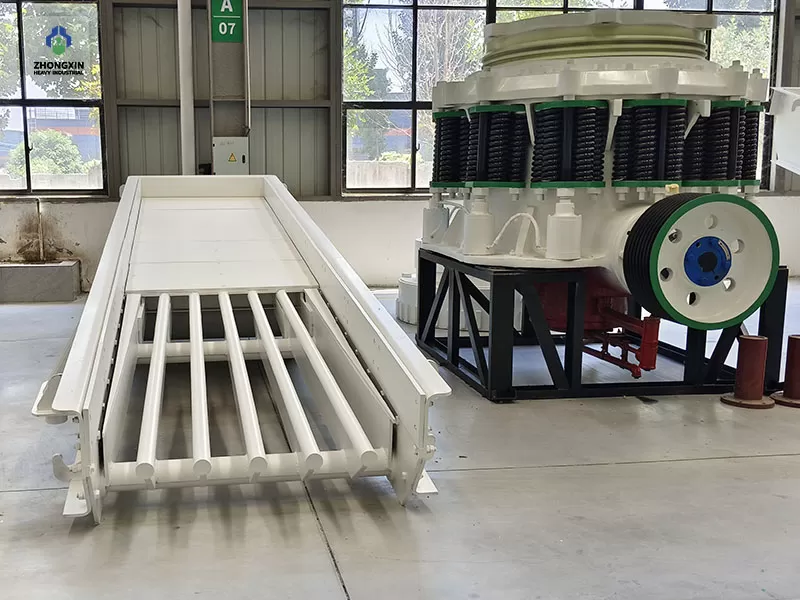
Traditional feeders offer only conveying functions; soil and fines entering the crusher can easily cause blockages or over-crushing. The ZSW vibrating feeder features a trough design incorporating a grizzly (bar) screen deck. As material is conveyed forward, soil and fine particles smaller than the bar spacing fall through the gaps, achieving pre-screening. This design not only boosts the crushing system's throughput but also protects downstream equipment—such as jaw crushers—from the abrasive wear caused by fines. For applications where screening is not required, the unit can switch to a pure feeding mode by adjusting or replacing blanking plates, demonstrating excellent operational versatility.
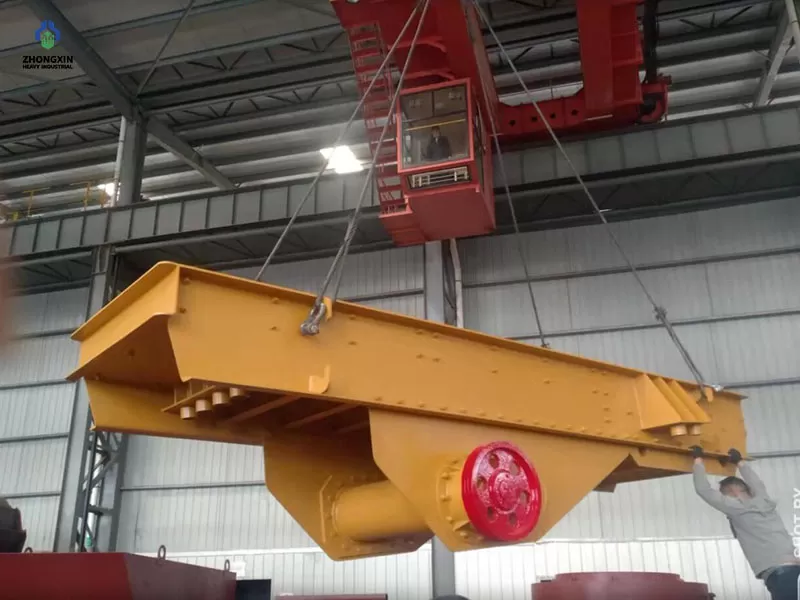
2. Dual Eccentric Shaft Exciter: A Heavy-Duty, Impact-Resistant "Heart"
The ZSW feeder utilizes a dual eccentric shaft exciter as its vibration source. Two eccentric shafts, meshed via gears and driven by an electric motor to rotate in opposite directions, generate immense linear exciting force. This structural design enables the equipment to withstand the intense impact loads of large ore or aggregate blocks dropping directly onto it, preventing damage from excessive material weight. Compared to electromagnetic or standard single-shaft excitation, the dual eccentric shaft structure delivers superior feeding capacity and stable vibration, ensuring the smooth, continuous forward movement of even large-sized materials.
3. Parabolic Hopping Trajectory: Reduced Liner Wear
Through the precise phase-angle coordination of the dual eccentric shafts, material within the trough does not merely slide; instead, it is continuously tossed upward, moving forward in a parabolic hopping trajectory. This unique motion significantly reduces direct friction between the material and the trough's bottom plate. Consequently, wear on the feeding trough is minimized, and the service life of the internal wear-resistant liners is substantially extended—reducing production downtime caused by liner replacement and lowering long-term maintenance costs.
4. Flexible Drive and Oil-Bath Lubrication Design
To accommodate varying production rates, the feeder series offers an optional variable-frequency drive (VFD) motor for adjustable speed control. Users can adjust the feed rate in real-time based on the load of the downstream crusher or the material level in the hopper, eliminating the need for frequent motor starts and stops; this not only saves energy but also protects the motor and the power grid. Additionally, the exciter utilizes an oil lubrication system; compared to grease lubrication, this offers superior heat dissipation and more thorough lubrication, while also simplifying oil changes, thereby facilitating easier routine maintenance and reducing operating costs.
1. High-Performance Primary Crushing Solutions
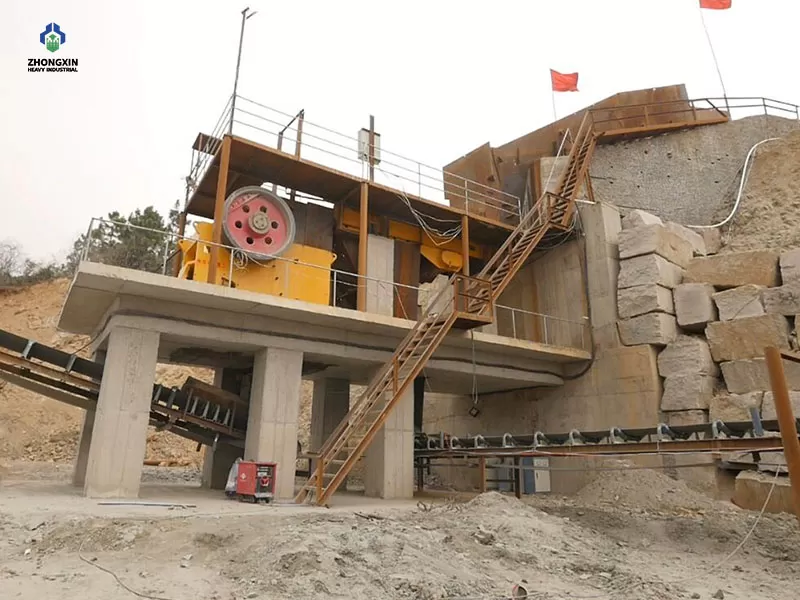
Our heavy-duty vibrating feeder machine is specifically engineered as a front-end solution for primary crushing lines. Functioning perfectly as a jaw crusher vibrating feeder, it regulates the flow of massive run-of-mine (ROM) ores and rocks before they enter the crusher. Whether utilized as a sand vibrating feeder in aggregate quarrying or implemented in tough metallic mining sites, this robust machine eliminates starvation and choking in your production circuit, ensuring a seamless, automated workflow.
2. Advanced Pre-Screening Mechanism & Principles
The operation of our ZSW series relies on premium linear vibratory feeder technology. Driven by a dual-eccentric shaft exciter, the directional feeder vibration forces the material to move forward in a continuous, leaping motion along the trough. As a specialized vibrating grizzly feeder (or grizzly vibrating feeder), it features adjustable, wear-resistant steel grizzly bars at the discharge end. Fine particles, soil, and sub-size waste rock drop through the gaps before reaching the crusher, drastically optimizing your crushing efficiency and saving power.
3. Product Classification & Custom Options
Depending on your specific material handling requirements and moisture content, we offer a diverse industrial vibrating feeder portfolio:
ZSW Series Grizzly Feeder: Ideal for heavy rock and large block stone processing, featuring a heavy-duty mechanical structure with pre-screening capabilities.
GZ Series Electromagnetic Vibratory Feeder: Best suited for conveying fine, granulated, or powdered materials with high precision. It features immediate automatic shut-off and infinite feed rate regulation.
4. Global Availability & Buying Guide
As one of the leading vibrating feeder manufacturers in China, we export our heavy equipment globally to Africa, South America, and Southeast Asia. We always have various standard models of vibrating grizzly feeder for sale in stock, providing fast shipping, genuine factory prices, and lifelong technical engineering support. Contact our technical team today to receive a customized drawing and a free quotation!
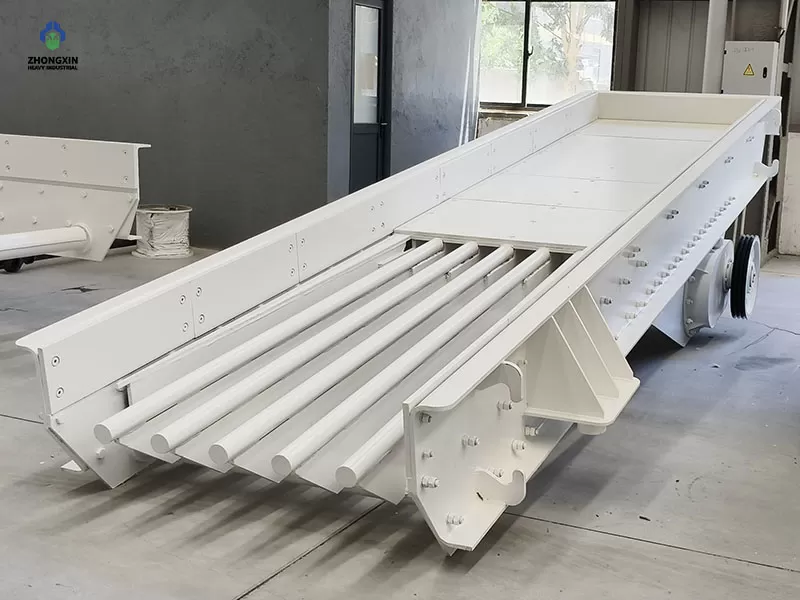
ZSW Vibrating Feeder harness the massive centrifugal force generated by a heavy-duty exciter to drive the trough and movable frame into a forced, continuous, and highly stable linear vibrational trajectory.
The core operational mechanics are driven by a sophisticated yet robust internal synchronization network:
The Exciter Architecture: The vibratory heart consists of two precisely engineered eccentric shafts—the master (drive) shaft and the slave (driven) shaft—interlocked via a high-precision, heavy-duty timing gear set.
The Power Transmission: An electric motor transmits raw torque to the master shaft via heavy-duty V-belts. Through seamless gear meshing, the master shaft instantly engages and drives the slave shaft.
Synchronized Counter-Rotation: Both eccentric shafts rotate simultaneously at identical speeds but in opposite directions (counter-rotation). This critical dynamic action causes the horizontal centrifugal forces to completely cancel each other out, while the vertical components combine to project a powerful, unidirectional linear force that vibrates the entire feeder trough.
The Ultimate Objective: This continuous, high-frequency linear thrust fluidizes the bulk material bed, forcing the rocks to hop forward in a steady, uninterrupted volumetric stream, achieving highly efficient material conveying and primary crusher regulation.
*La capacidad de producción variará en función de los distintos materiales, tamaño de alimentación y otros factores.
| Model | Max Feed Size(mm) | Capacity (t/h) | Motor Power (kw) | Overall Dimensions (L*W*H)(mm) | Weight (kg) | Size of Funnel(mm) |
| ZSW-380*96 | 500 | 96-160 | 11 | 3882*2224* 2121 | 4100 | 3800*960 |
| ZSW-490*95 | 500 | 120-240 | 15 | 4957*2277* 2150 | 5004 | 4900*950 |
| ZSW-490*110 | 580 | 120-280 | 15 | 4957*2400* 2150 | 5320 | 4900*1100 |
| ZSW-590*110 | 600 | 200-350 | 22 | 6000*2500* 2150 | 6130 | 5900*1100 |
| ZSW-600*130 | 750 | 400-560 | 22 | 6082*2580* 2083 | 7800 | 6000*1300 |
| ZSW-600*150 | 1000 | 800 | 30 | 6627*2350* 3068 | 12110 | 6000*1500 |
| ZSW-600*200 | 1000 | 1200 | 37 | 6436*3853* 3014 | 18650 | 6000*2000 |
Contáctenos rellenando el formulario o por Email: sales@zxcrusher.com

Expert guidance to fine-tune grizzly gaps and installation angles based on fluctuating onsite clay and rock sizes, maximizing primary pre-screening efficiency.

Special trough surface configuration combined with anti-stick compound liners effectively breaks the surface tension of wet clay, preventing sidewall caking and material build-up during rainy seasons.

Driven by digital loop feedback, the system auto-calibrates its vibration frequency based on real-time bunker pressure and moisture variances, achieving a smart, autonomous material-conveying sequence.
We provide comprehensive support throughout the entire lifecycle of your equipment. Our service approach ensures long-term reliability and optimized performance for every project.
 Русский